
 EN
EN RU
RU
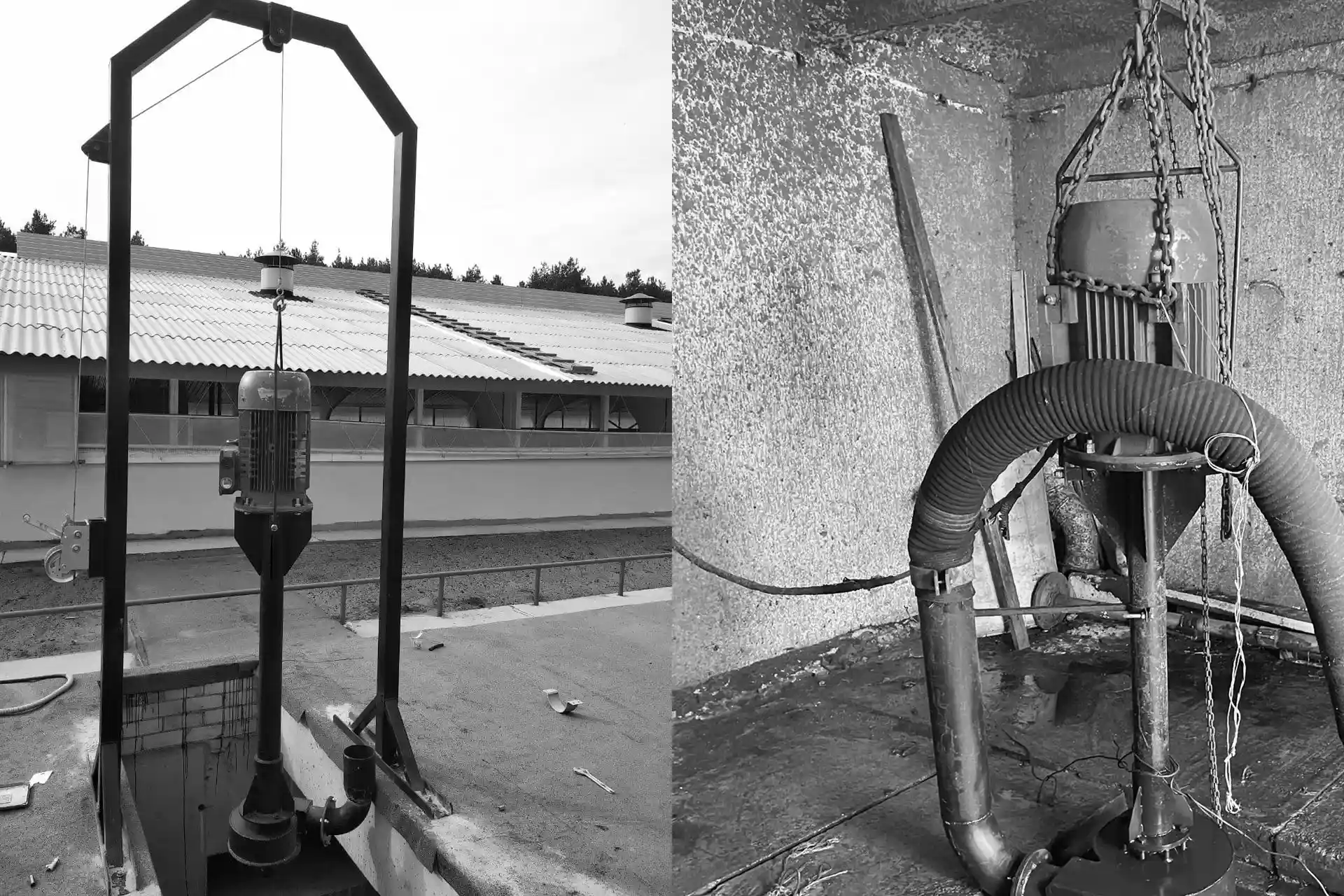
Industrial pumps and manure removal systems — manufactured in Belarus
- In production since 2007
- More than 100 units installed on farms
- Manufacturer's service in Vitebsk
- Delivery across Belarus and Russia
TU BY 390449655.001-2017, EAEU declaration No. BY/112 11.01. TR010 000.00 23818
Certification is held by the manufacturer of the series, VitTechNasos LLC; the VTN series is built by NPO-Organika, the successor to that manufacturer.
Product Catalog
NPO-Organika LLC develops and manufactures VTN series industrial pumps, URNS-1M dewatering units, modular liquid manure storages, screw conveyors and turnkey pumping stations — for livestock complexes and industry.
About Company NPO-Organika
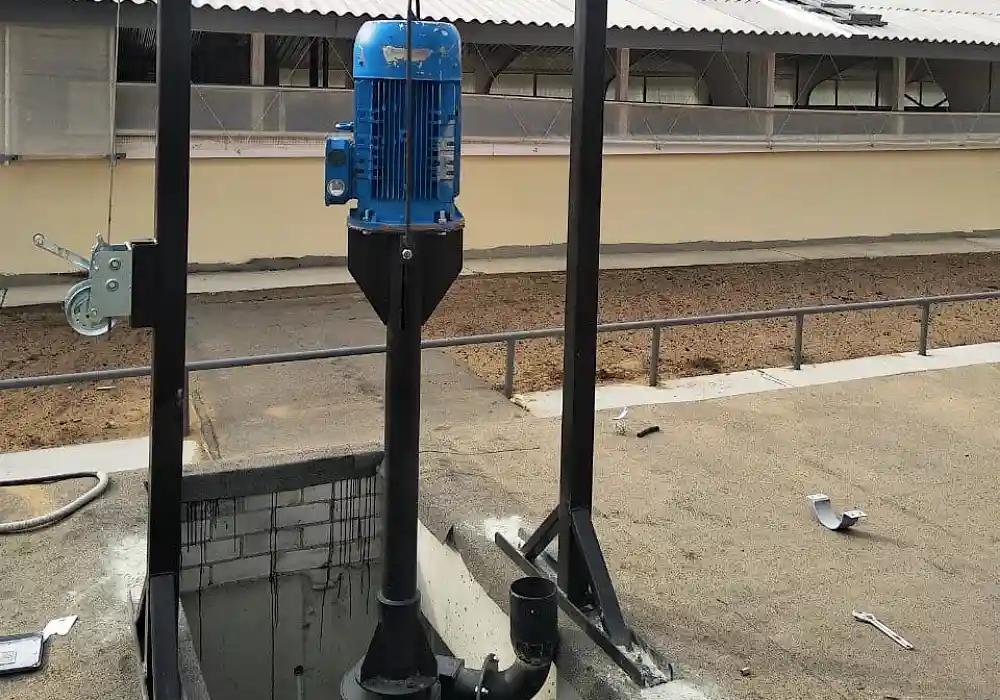
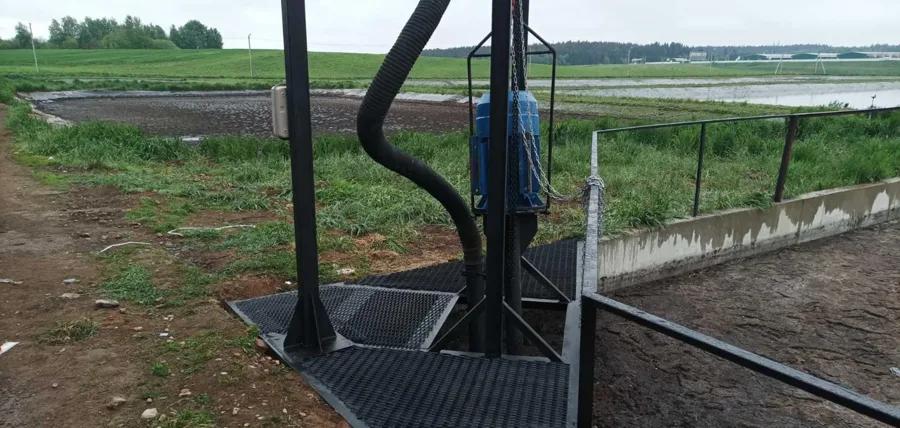
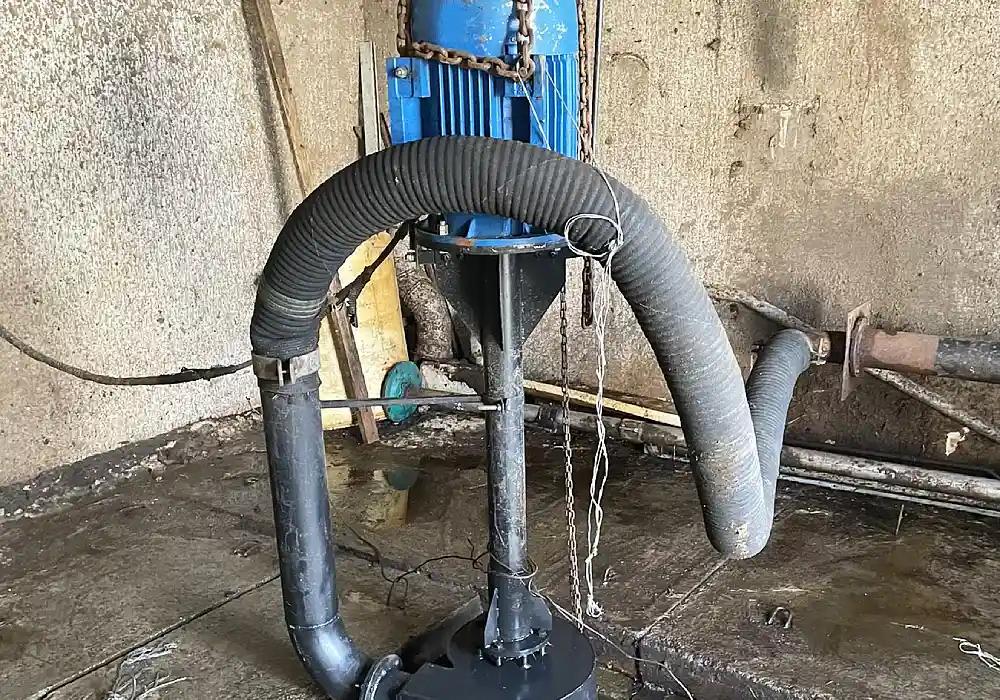
NPO-Organika LLC develops and manufactures industrial pumps and manure removal systems; we build the VTN series as the successor to its original manufacturer, VitTechNasos LLC (Vitebsk). VTN are submersible centrifugal pumps for viscous and contaminated media with fibrous inclusions. Livestock farming is our home industry, but the same problem exists in municipal utilities, power engineering, construction and food processing: fibre and debris in the flow that stop ordinary pumps. VTN pumps have an inlet cutting mechanism: fibres are cut, so no separate shredder is needed in the line. The VTN-1DU flagship delivers up to 650 t/h on liquid manure. The same flagship's head reaches up to 40 m; these are limits of different versions, and we select the version for your task at the ordering stage. In production since 2007, more than 100 installations; custom-built for your site, delivery across Belarus and Russia, manufacturer's service in Vitebsk.
up to 650 t/h
High-performance liquid pumping capacity
Head up to 40 m
Powerful head for high-elevation pumping
Works with contaminants
Effective handling of heavy, viscous, and contaminated media
Versatility
Applications across various industrial sectors
Need help choosing pumping equipment?
Our specialists will select the optimal model for your tasks and operating conditions
Application Areas
Our products are used in the following industries:
Manure handling is the VTN series' home task: pumping from manure collectors and lagoons, mixing, separation into fractions and storage — with equipment from one manufacturer.
Manure at natural moisture — no dilution
To make a mass-produced municipal sewage pump take manure, the mass has to be diluted: passports of imported submersible sewage pumps limit dry matter to 3–8%, while manure at 75% moisture is about 25% dry matter. The added water is then stored, pumped and hauled by the farm all year round. VTN pumps manure from 75% moisture as it is. Documented proof: in 2016 the Mazolovogaz farm (Vitebsk region) did not spend 8,561 m³ of water on dilution — that volume never had to be stored or hauled: BYN 19,100 saved by the farm's own calculation (fuel, labour, electricity; ref. No. 531 of 16 August 2017). Get your own figure with the savings calculator.
Mixing and pumping in one unit
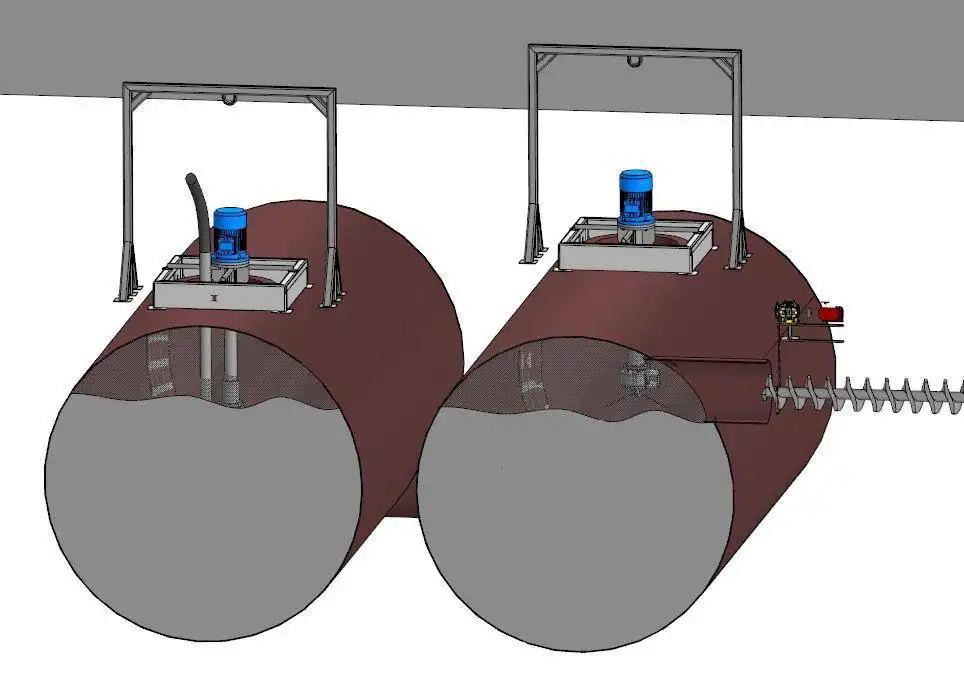
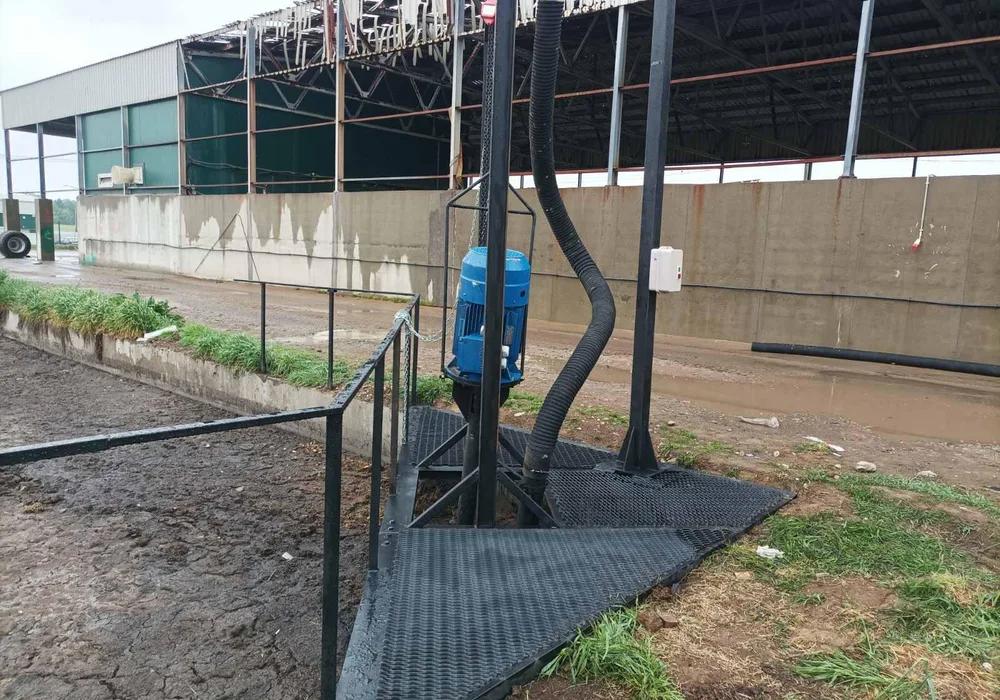
Stored liquid manure separates: a floating crust of straw and feed residues on top, bottom sediment below. In a manure collector or pit, a VTN mixes and delivers the mass with a single unit — no agitator is needed in the layout at all; Russian technological design guidelines (RD-APK 1.10.15.02-17, cl. 7.3) directly require reception tanks to be equipped with submersible pumps for mixing and pumping, and for open pits and lagoons this is exactly the machine we build. In a lagoon, the pump stirs the intake area within a radius of up to 5 m (up to 7 m for VTN-1DU), keeping sediment from consolidating at the suction point.
For any farm layout
A standard pit — VTN-1; deep tanks — the extended VTN-1D version, and for the deepest — VTN-1DU (submersion from 0.5 to 10 m); tight hatches — the compact VTN-1M with an installation opening from 300×300 mm (compact versions); points without mains power are served by the PTO-driven VTN-1MT. Further down the chain — separation into fractions (URNS-1M) and the modular liquid manure storage.
Models:VTN-1·VTN-1M·VTN-1MT·VTN-1DU·URNS-1M·liquid manure storage
At sewage pumping stations and treatment plants, pumps are killed not by the wastewater but by what gets into it: fibre, textiles, sanitary items.
Wastewater with fibre and textiles
The typical pumping-station failure: fibre and wipes wrap around the shaft and the mechanical seal, the seal tears, water gets into the motor — the station stands idle until the crew arrives. In VTN pumps, fibre is cut by the inlet cutting mechanism before it ever reaches the impeller — the very cause of unplanned lifting and disassembly is removed. No add-on macerators to buy: the mechanism is built into every model of the series.
Treatment plant sludge
Raw sludge from primary settling tanks, excess activated sludge, floating matter — media where clogging resistance matters most. Belarusian codes require sludge pumps to operate flooded or with positive suction head (SN 4.01.02-2019, cl. 9.2.27) — a submersible VTN meets this condition by definition: the pump works below the liquid level, with no separate suction piping.
Sludge separation and thickening
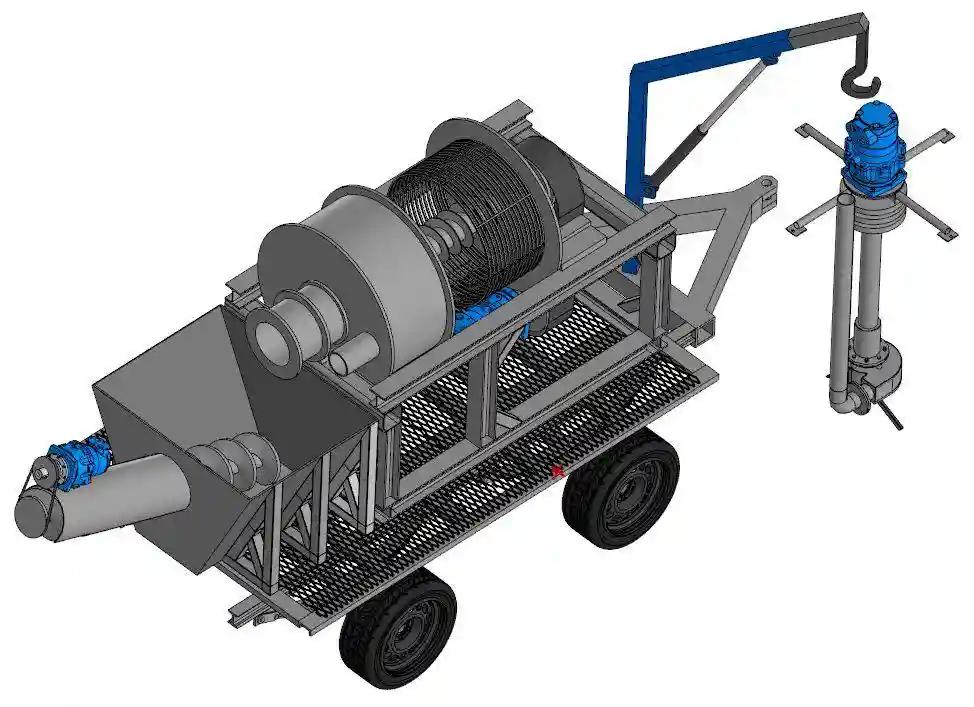
For separating liquid sludge into fractions the line includes URNS-1M — a filtering centrifuge (a centrifugal sieve). Applicability to your sludge and the working rate are determined by the medium's parameters — send us the data and we will do the sizing.
Network-water circuits are served by specialised pumps. Our zone at a plant is sludge and drainage sumps where the medium is no hotter than +40 °C.
Water-treatment sludge
Clarifier sludge from water treatment is a lime sediment; every operations crew knows how it scales up pipework — removing it in time is cheaper than cleaning the line. Clarifiers run at 30–40 °C, the upper edge of our range, so we verify the temperature at your extraction point before sizing. VTN pumps sludge-laden effluents and sediment, and intake-area mixing is standard on the series — sediment has a harder time consolidating at the suction.
Honest sizing for your pumping point
We do not take hot circuits (the machine's limit is +40 °C), abrasive ash-handling pulps or explosion-hazard zones — and we say so upfront. Name the medium, temperature and inclusions at your pumping point — our engineer will tell you whether VTN fits and propose a version: from VTN-1 (capacity up to 300 t/h, rated on liquid manure) to the compact VTN-1M for tight sites.
A flooded excavation pit stops the whole site. The standard open-drainage scheme in both countries' codes is a sump, a submersible pump and a standby unit (Russia — SP 45.13330.2017; Belarus — SP 5.01.02-2023).
Open drainage of excavation pits
Pit water is never clean: sand, silt, clay. VTN takes such water; solids up to 30 mm (VTN-1) pass through the pump. VTN-1 capacity is up to 300 t/h (rated on liquid manure); the design inflow and the duty point on your water are calculated during selection. Control cabinet, level automation and standby — per the site design.
Quarries: pumping from sumps in open-pit operations
In open-pit mining, VTN-1DU pumps water from sumps and deepened areas to the water collection sump: submersion from 0.5 to 10 m, head up to 40 m. Underground workings are outside our scope: our pumps are built in general-industrial design only.
A site without mains power
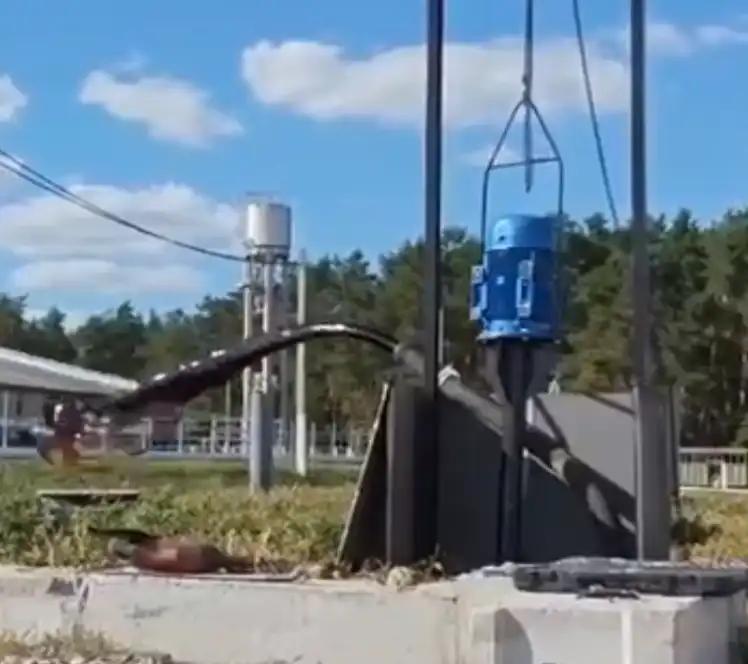
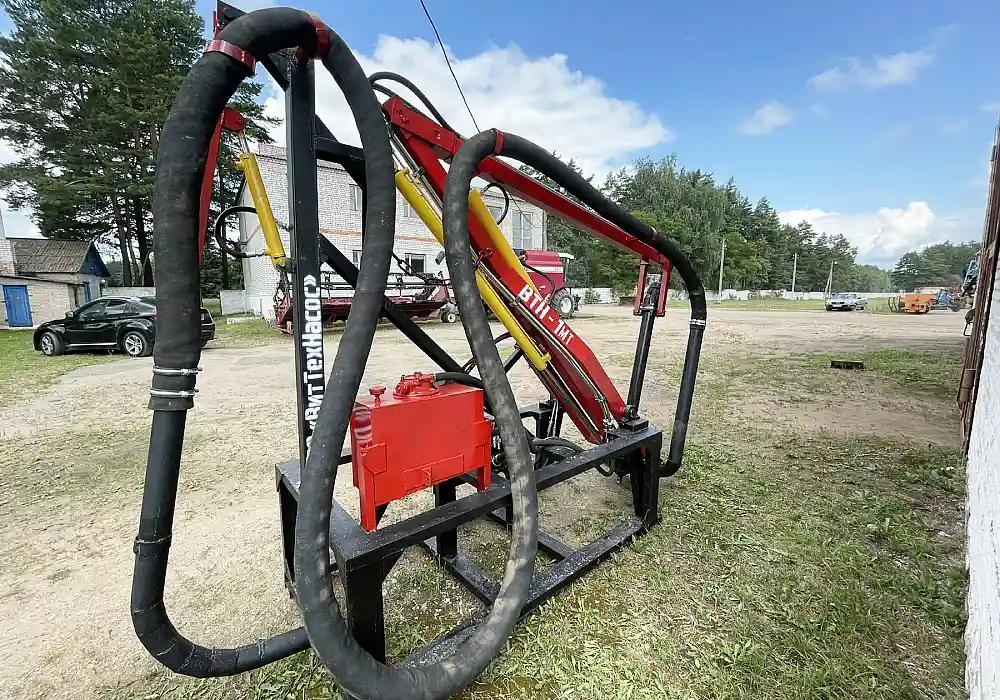
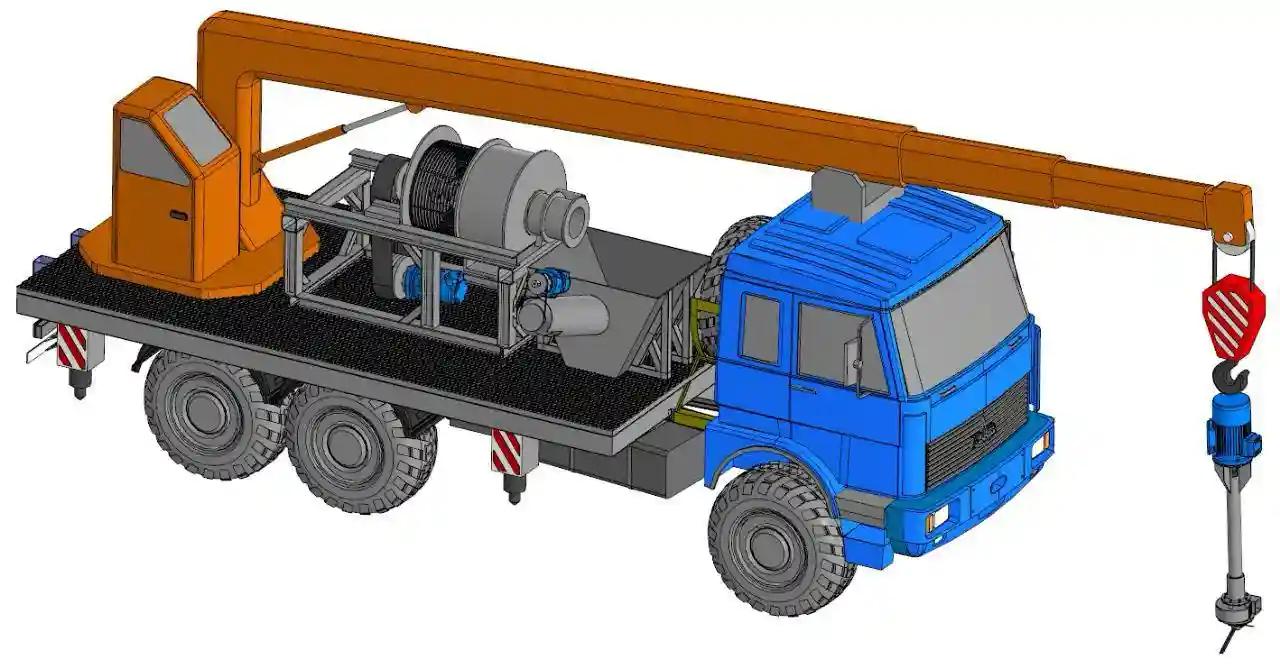
Temporary sites often have no 380 V supply. VTN-1MT is driven by a tractor PTO: drive up, lower the pump on the boom (intake from up to 6 m depth — the extended-boom version), pumping starts. No foundation, no electrical work; the crew is one tractor operator.
We work with processing waste and effluents — fibrous and fat-containing media on which ordinary pumps clog. Our point is downstream of collection tanks and local treatment facilities, where the medium is no hotter than +40 °C; in Russia, discharge to the sewer is in any case limited to the same temperature (Government Decree No. 644, Annex 5).
Fibrous processing waste
Potato pulp, vegetable waste, slaughter and meat-processing waste — including paunch content from the receiving tank — is fibre that wraps around the working parts of mass-produced pumps. The VTN cutting mechanism cuts fibrous inclusions at the inlet — wrapping stops being a reason to halt the line for cleaning.
Fat-containing effluents and treatment sludge
Grease-trap sediment and flotation sludge from local treatment facilities are registered waste: the plant pays for its disposal. Effluents downstream of the grease trap and equaliser are pumped by VTN without dilution; to cut haul-away volumes the line includes the URNS-1M separation unit — applicability to your medium is checked against its parameters.
A flood or a utility failure does not wait for installation work: the water is dirty — silt, branches, debris. Power available — a stationary pump works; no mains — tractor PTO drive.
Pumping out floodwater
Where 380 V power is available — pumping stations, sumps, industrial sites — water with silt and debris is taken by VTN-1 and VTN-1DU: fibre is cut by the cutting mechanism, solids pass through (up to 30 mm for VTN-1, up to 45 mm for VTN-1DU). The pump is lowered straight into the water; no intake-site preparation is needed.
Autonomous — from a tractor
When a failure cuts the power, an electric pump is useless — VTN-1MT runs off a tractor PTO. The boom lowers the pump over the side; intake depth is 2.5–5.5 m with the base boom and up to 6 m with the extended one; a version with a boom up to 12 m is made to order, for a tractor of the matching class. The crew is one tractor operator; the working radius is wherever the tractor can drive.
Across all these industries the task is the same: pump a viscous or contaminated medium with fibrous inclusions — and not stop on a clog. The VTN series is built for exactly that: an inlet cutting mechanism, steel wetted parts, versions from the compact VTN-1M with an installation opening from 300×300 mm to the VTN-1DU flagship with capacity up to 650 t/h on liquid manure. The head of the flagship's larger versions reaches up to 40 m; the duty point is always calculated for the specific site. Tell our engineer about your task — we will select the model and version.
Estimate your farm's savings
What the water added to dilute manure costs per year: hauling, electricity, and the water itself.
Norm: 55 kg/head/day at 88.4% moisture; milking parlour effluent 20 l/head/day
Refine the calculation and see the assumptions on the calculator page
Frequently asked questions
What does NPO-Organika manufacture?
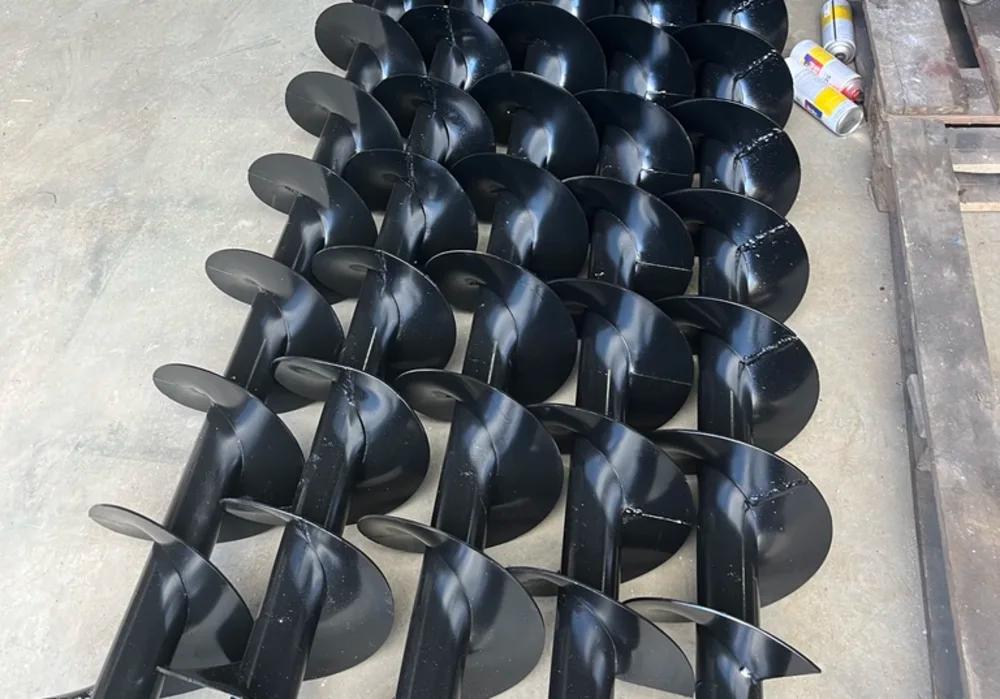
NPO-Organika LLC manufactures submersible centrifugal pumps of the VTN series (VTN-1, VTN-1M, VTN-1MT, VTN-1D, VTN-1DU), URNS-1M manure dewatering units, modular liquid manure storages, VTSh-300 screw conveyors and turnkey pumping stations — portals, hoists, goosenecks. Equipment is built to the conditions of your site.
What is the capacity of VTN pumps?
It depends on the model: the compact VTN-1M delivers 200 t/h on liquid manure, the base VTN-1 — up to 300 t/h, VTN-1MT — from 300 t/h, and the VTN-1DU flagship — up to 650 t/h (up to 450 t/h on viscous manure at 85% moisture). The series' maximum head is up to 40 m on the larger VTN-1DU versions; the duty point is selected for your site.
Can VTN pumps handle contaminated liquids?
Yes, the series is built for viscous and contaminated media. The inlet cutting mechanism cuts fibres — straw, corn stalks — so clogs do not form, and no filters or separate shredder are needed. Solids up to 30 mm (VTN-1) pass through the pump.
Why does the manure not need to be diluted with water?
VTN pumps take manure at natural moisture from 75% as it is. Mass-produced sewage pumps from municipal services are designed for diluted wastewater: water has to be added, and the volumes to store, pump and haul multiply. With VTN that water never appears on the farm.
Do you provide delivery and installation?
Yes: delivery across Belarus and Russia, with installation and commissioning by the manufacturer's own specialists. We work with Russian customers directly. Delivery and installation terms are agreed at ordering.
In which industries is the equipment used?
Agriculture and livestock farming is our home industry. The same task — a viscous or contaminated medium with fibre — exists in municipal utilities and wastewater treatment, power engineering, construction and mining, food processing and emergency services. See the "Application Areas" block on this page.
What are the savings with VTN pumps?
The main item is water: VTN pumps manure without dilution, so the extra cubic metres are never stored, pumped or hauled. A documented case: in 2016 the Mazolovogaz farm saved 8,561 m³ of water and BYN 19,100 by its own official calculation (ref. No. 531 of 16 August 2017). Get your own figure with the calculator on this page.
How does VTN-1MT differ from VTN-1?
VTN-1MT is the autonomous model: instead of an electric motor it has a hydraulic motor driven by a tractor PTO, mounted with a standard SA-1 hitch. A telescopic boom up to 12 m lowers the pump into the tank: intake from 2.5–5.5 m with the base boom and up to 6 m with the extended one. The pumping point needs no mains power.
What is the URNS-1M centrifuge for?
URNS-1M separates manure into solid and liquid fractions with a productivity of up to 150 m³/hour. The solid fraction (moisture 30–85%) goes to composting, organic fertilisers and bedding; the liquid one (up to 99%) — to field irrigation or the slurry tank.
What is the warranty and who services the equipment?
The warranty is 12 months. Manufacturer's service in Vitebsk: installation, warranty and post-warranty maintenance, spare parts from stock — main models and components are kept in stock. Contact us: +375 29 709 00 01, organika.vtb@gmail.com; office — Vitebsk, M. Gorky str. 59, office 48a.